
Pilates House · The method
The Pilates method
A system of exercise created a century ago to restore the body’s natural movement. This is how we understand it and teach it at Pilates House, in Alicante.
Its origins
Joseph Pilates and Contrology
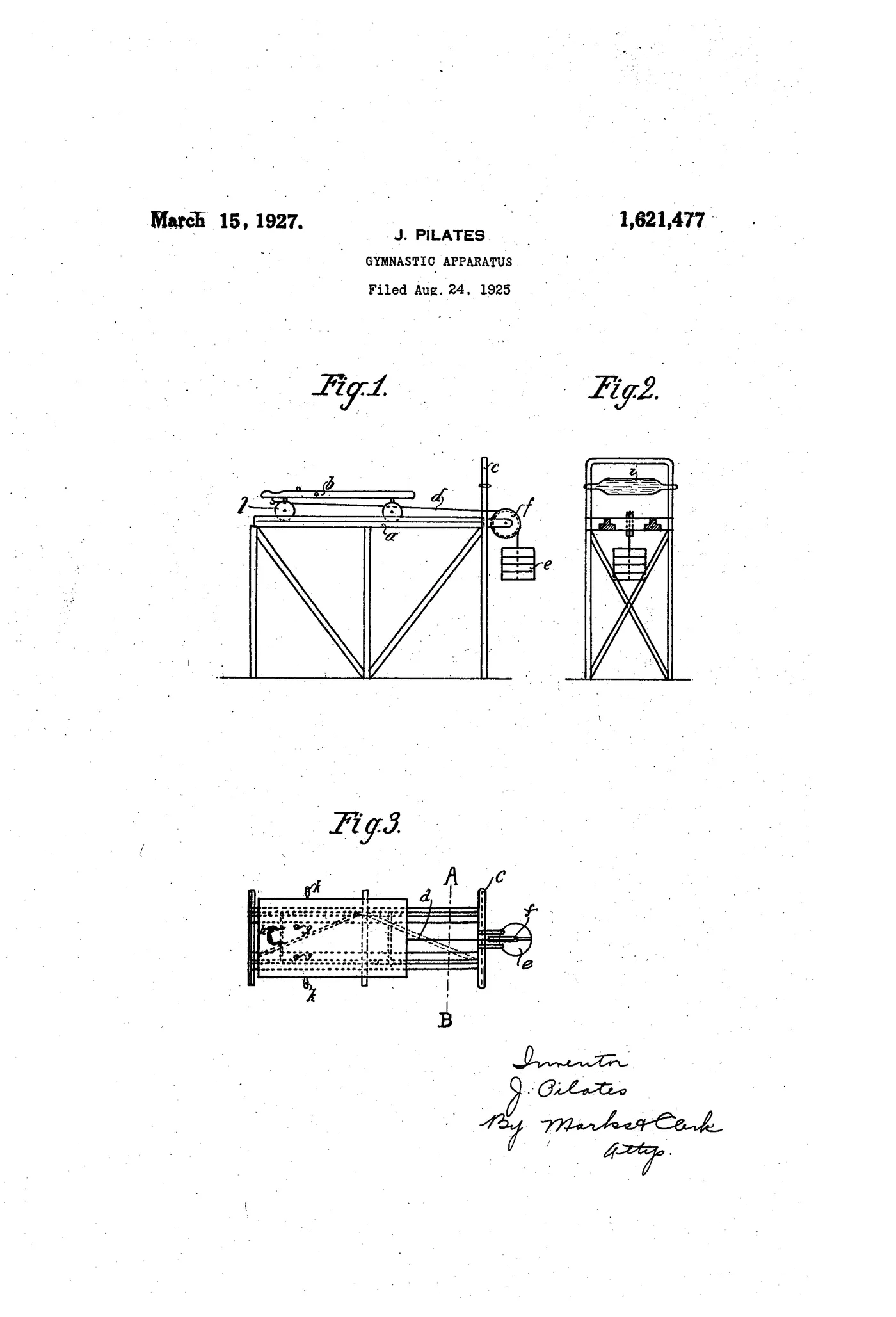
Joseph Pilates called his method Contrology: conscious control of the body through the mind. This is how it began.
- Childhood
A child in fragile health in Germany who set out to strengthen his body: gymnastics, boxing and the study of movement.
- First World War
He helped patients who couldn’t get out of bed by fixing springs to their beds. That is where the machines, such as the Cadillac, were born.
- New York
He opened his studio with his wife, Clara. Dancers and athletes became his first students.
- Today
More than five hundred original exercises, still taught all over the world.
What it is
Restoring natural movement
Pilates looks for balance between the muscles, natural breathing and good alignment of the skeleton. It isn’t aerobic exercise or a stretching routine: it’s learning to move well, from the centre.
Muscle balance
No muscles left short or weak: all of them working on your side.
Breathing
Lateral, into the sides of the ribs, so the body moves without tension.
Alignment
A posture that asks the least effort of your bones and joints.
“Physical fitness is the first requisite of happiness.”Joseph Pilates · Return to Life, 1945
The principles
Ten ideas in every movement
Joseph Pilates spoke of six. At our school, Movimiento Pilates, we work with ten.
- 01
Concentration
The mind leads every movement.
- 02
Breathing
Everything starts with the breath: wide into the ribs, never held.
- 03
Centring
The Powerhouse: abdominals, back, hips and pelvic floor working together.
- 04
Control
Organise the body before you move it.
- 05
Precision
Every detail matters more than the number of repetitions.
- 06
Flow
Continuous movement, never jerky.
- 07
Alignment
Pelvis, spine, shoulder blades and legs where they belong.
- 08
Opposition
Lengthening in two directions: stretching is always active.
- 09
Coordination
Movement starts in the centre and travels outwards.
- 10
Resistance
Springs and machines that support you and challenge you.
Benefits
What you notice when you practise
Better posture
You learn to place your pelvis, spine and shoulders, and you take it into everyday life.
A strong centre
Abdominals and back work together and protect the lower back.
More mobility
We move the spine in every direction, and every joint too.
Strength without impact
The springs provide resistance without punishing your joints.
Body awareness
You understand how you move and correct it before anything starts to bother you.
Balance and coordination
You gain stability, something you notice more and more as the years go by.
Pilates isn’t aerobic, so combine it with walking, swimming or cycling. And it supports rehabilitation; it never replaces it.
How we teach it
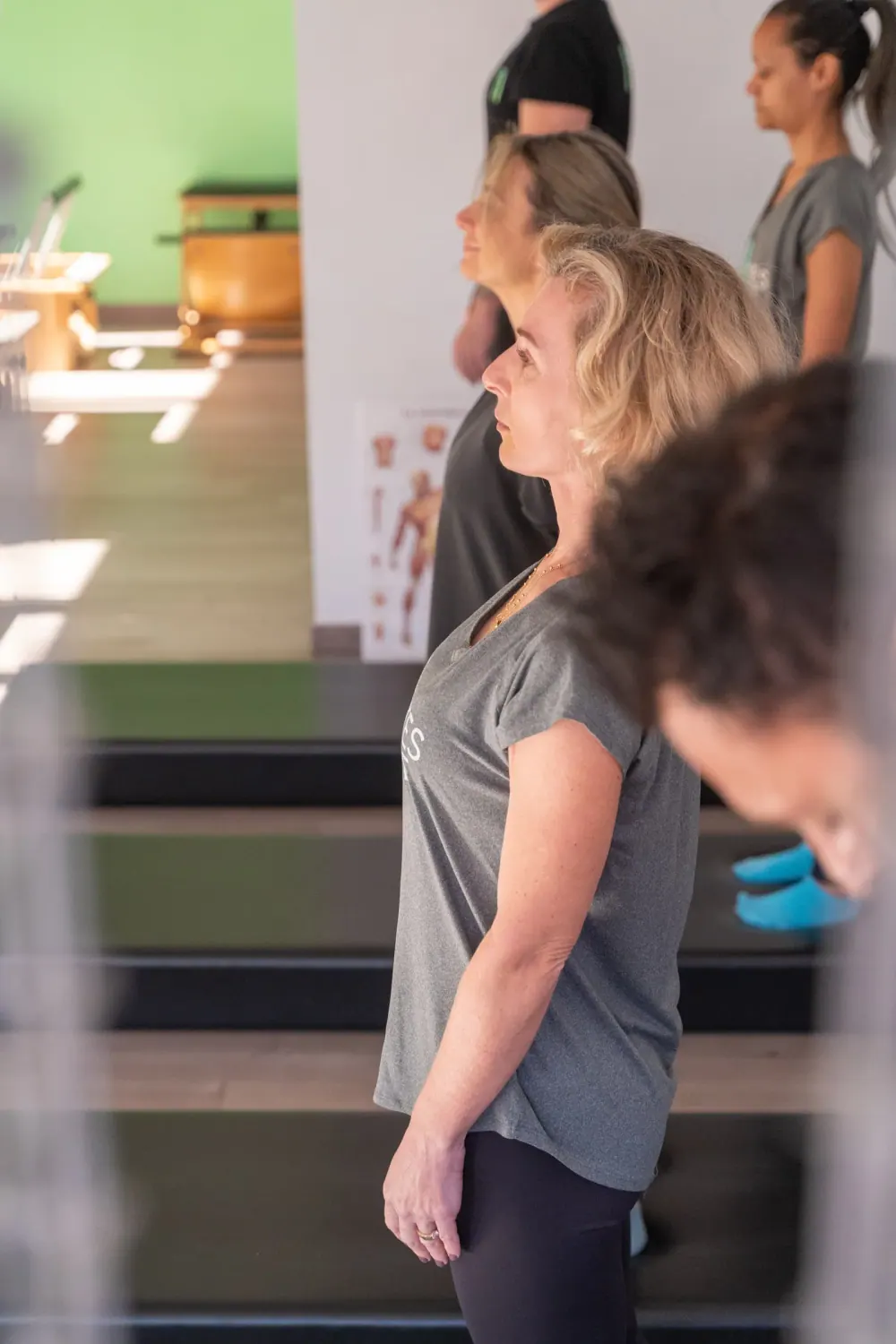
How we see it at Pilates House
- The classical method
- We trained at the Movimiento Pilates school. Joseph Pilates’ original exercises are the goal; until you get there, we adapt them to each body.
- The mat comes first
- The machines come in once your centre is ready. That’s why every class combines mat work and machines.
- Quality over quantity
- Few repetitions, done well. We’d rather you left knowing how to move than left exhausted.
- Positive correction
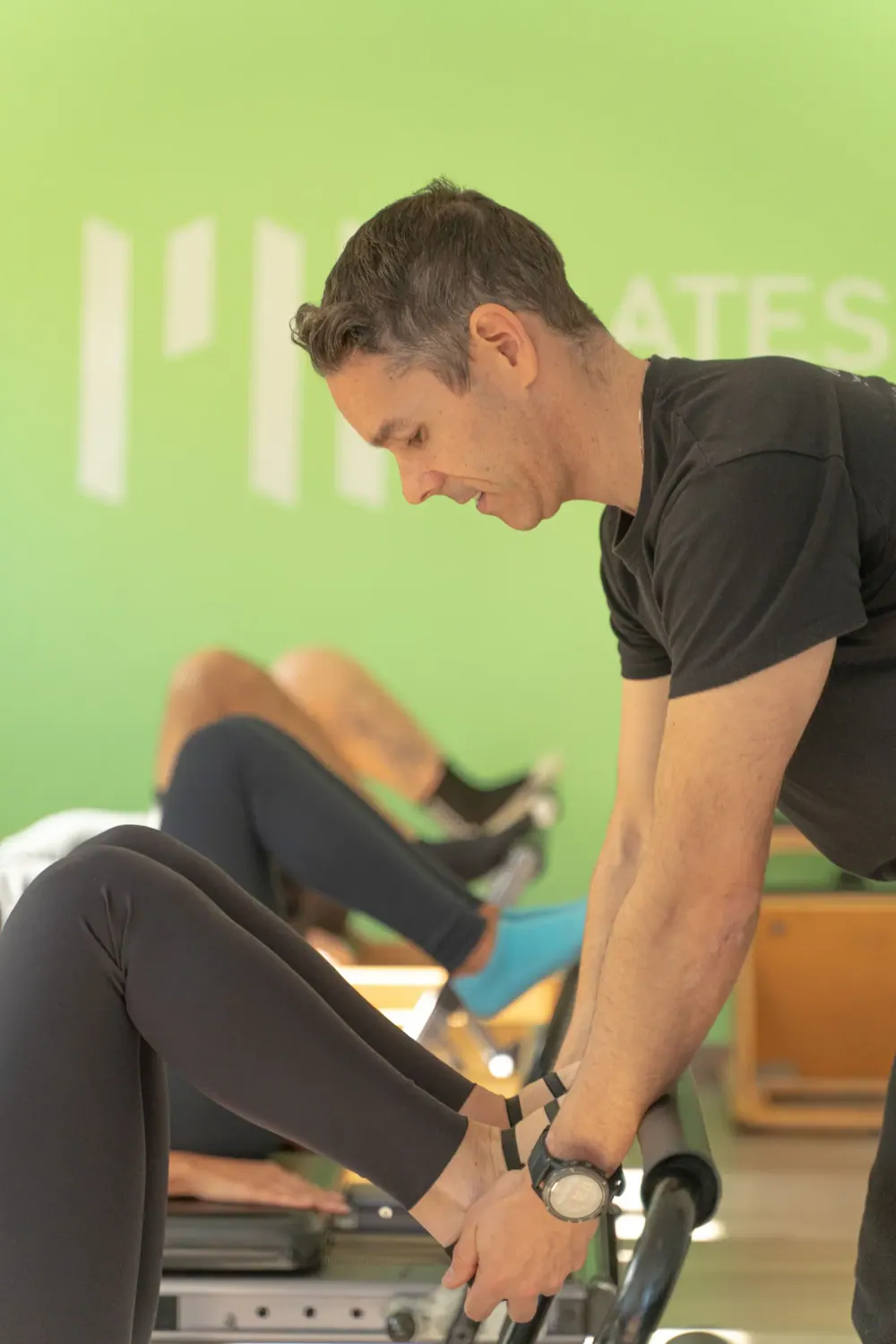
- We guide you with words and with our hands, never forcing anything, and always in a friendly atmosphere.
Contact
Come and meet us
- Where
- Avda. Costa Blanca, 16 · Playa de San Juan · Directions
- Opening hours
- Monday to Friday, 9:30am to 9:30pm
- Phone
- 658 33 87 57
Questions about the method
Is Pilates only for women?
No. Joseph Pilates was a boxer and a gymnast, and the method builds strength, control and mobility for any body.
How is it different from yoga?
They share breathing and body awareness. Pilates focuses on the centre, alignment and working with springs and machines.
Will it help if I have back pain?
Strengthening your centre and improving your posture often helps. We assess your case and, if needed, work alongside your physio or your doctor.
Do I need to be flexible?
No. Flexibility comes with practice; we start from where you are.
When will I notice a difference?
With two classes a week, many people find their posture and their body feel different within a few weeks. We measure it in your app every three months.